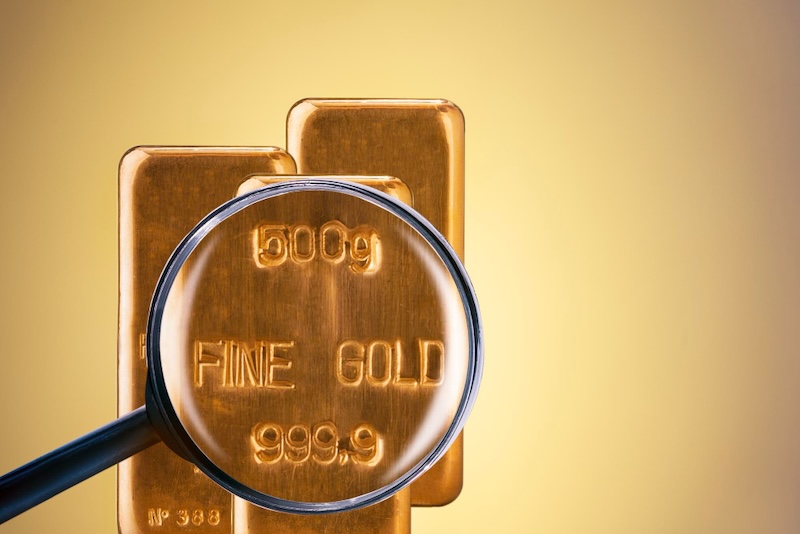

A gold and silver IRA is one of the most powerful tools available to Americans who want to protect their retirement savings from inflation, currency risk, and stock market volatility. If you’ve been searching for clear, unbiased answers about how these accounts work — without a sales pitch — you’re in the right place.
This guide from GoldenCrest Metals answers every meaningful question about gold and silver IRA: IRS rules, rollovers, eligible metals, storage, taxes, fees, and how precious metals fit into a diversified retirement portfolio. Questions? Call us anytime at 833-426-3825.
Table of Contents
- What Is a Gold and Silver IRA?
- Gold and Silver IRA Rollovers & Transfers
- IRS Rules for Gold and Silver IRAs
- Gold and Silver IRA Storage Requirements
- Tax Benefits & Withdrawal Rules
- Gold and Silver IRA Fees & Costs
- Portfolio Strategy: How Much to Allocate
- Risks & Honest Considerations
- How to Open a Gold and Silver IRA
- How to Choose the Right Company
What Is a Gold and Silver IRA?
The definition of a gold and silver IRA
A gold and silver IRA is a self-directed Individual Retirement Account (SDIRA) that holds physical precious metals — gold and silver coins or bars — inside a tax-advantaged retirement structure. Unlike conventional IRAs that limit you to stocks, bonds, and mutual funds, a gold and silver IRA gives you direct ownership of tangible assets while preserving the same IRS tax benefits.
It functions exactly like a Traditional or Roth IRA in terms of tax treatment, contribution limits, and distribution rules. The difference is simply what lives inside the account: real, physical metal stored in an IRS-approved depository.
How a gold and silver IRA differs from a traditional IRA
The core difference is what you hold. A traditional IRA holds paper assets — stocks, bonds, ETFs — at a standard brokerage. A gold and silver IRA holds physical precious metals stored at an IRS-approved depository on your behalf.
| Feature | Traditional IRA | Gold and Silver IRA |
|---|---|---|
| Asset type | Stocks, bonds, funds | Physical gold & silver |
| Tax treatment | Traditional or Roth | Traditional or Roth |
| 2026 contribution limits | $7,500 / $8,600 | $7,500 / $8,600 |
| Custodian required | Standard brokerage | IRS-approved SDIRA custodian |
| Storage required | Digital records only | IRS-approved depository |
| Income generation | Dividends, interest | None (appreciation only) |
| Inflation hedge | Indirect | Direct (physical metal) |
Gold and silver IRA vs. gold ETFs and mining stocks
These are three fundamentally different types of investment:
- Physical gold and silver IRA: You own actual, tangible metal stored in a secure vault in your name. No counterparty risk. Direct exposure to the intrinsic value of the metal.
- Gold ETFs (e.g., GLD, IAU): You own shares in a fund that tracks gold prices. You do not own physical metal — you hold a paper claim that carries counterparty risk.
- Gold mining stocks: Equity in companies that mine gold. Their value depends on management, production costs, geopolitical risk, and stock market conditions — not just the metal’s price.
For investors who want direct, uncorrelated exposure to gold’s actual value, a physical gold and silver IRA is the most straightforward approach.
Gold and Silver IRA Rollovers & Transfers
Can I roll over my 401(k) into a gold and silver IRA?
Yes. Most qualified retirement accounts can be rolled over into a IRA without triggering taxes or penalties, provided you follow IRS guidelines. Eligible accounts include:
- Traditional 401(k) and Roth 401(k)
- 403(b) plans (teachers, nonprofit employees)
- Thrift Savings Plans (TSP — federal employees)
- 457(b) plans
- Traditional, Roth, and SEP IRAs
- SIMPLE IRAs (after a 2-year holding period)
Note: You generally need to have separated from the employer whose plan you’re rolling over, or the plan must allow in-service distributions. Always consult a tax professional before initiating any rollover.
Direct rollover vs. indirect rollover: what’s the difference?
A direct rollover (trustee-to-trustee transfer) moves funds directly from your existing retirement account to your new gold and silver IRA custodian. You never touch the money. This is the safest method — no taxes withheld, no 60-day deadline.
An indirect rollover means your current custodian sends you a check (after withholding 20% for taxes). You then have 60 days to deposit the full amount — including the withheld 20% — into your new gold and silver IRA. Miss the deadline and the entire amount becomes taxable income, plus a potential 10% early withdrawal penalty. Only one indirect rollover is permitted per 12-month period per IRA account.
GoldenCrest Metals recommends direct rollovers exclusively to eliminate risk of missed deadlines, tax withholding complications, or accidental taxable distributions.
IRS Rules for Gold and Silver IRAs
IRS purity requirements for a gold and silver IRA
The IRS sets strict fineness (purity) standards under Internal Revenue Code Section 408(m)(3). Metals in a gold and silver IRA must meet these minimums:
- Gold: Minimum 99.5% pure (.995 fineness)
- Silver: Minimum 99.9% pure (.999 fineness)
- Platinum: Minimum 99.95% pure (.9995 fineness)
- Palladium: Minimum 99.95% pure (.9995 fineness)
The one notable exception is the American Gold Eagle coin — it is 91.67% pure gold but was specifically authorized by Congress for IRA inclusion due to its legal tender status.
Important: Collectible and numismatic coins are strictly prohibited under IRC Section 401(a). Rare coins, proof coins, and graded collectibles — regardless of metal content — cannot be held in a gold and silver IRA. Be very cautious of any company pushing numismatic coins for IRA purposes; this is a common industry red flag.
Which coins and bars are approved for a gold and silver IRA?
IRS-approved gold coins and bars include:
- American Gold Eagle (bullion version)
- American Gold Buffalo (.9999 fine)
- Canadian Gold Maple Leaf
- Austrian Gold Philharmonic
- Australian Gold Kangaroo
- Gold bars from NYMEX/COMEX, LME, or ISO-9000 accredited refiners
IRS-approved silver coins and bars include:
- American Silver Eagle
- Canadian Silver Maple Leaf
- Austrian Silver Philharmonic
- Australian Silver Kangaroo
- .999 fine silver bars from approved refiners
Gold and Silver IRA Storage Requirements
Can I store gold and silver IRA metals at home?
No. This is one of the most critical rules of a gold and silver IRA. The IRS requires that all precious metals held inside an IRA be stored in an IRS-approved, third-party depository — not in your home, personal safe, or bank safe deposit box.
Taking physical possession of metals from your gold and silver IRA is treated by the IRS as a taxable distribution. If you are under age 59½, you will also face a 10% early withdrawal penalty on top of the income taxes owed on the full value.
Beware of “home storage IRA” promotions. Some companies claim you can store IRA gold at home using an LLC structure. The IRS has challenged this aggressively. In most cases, home storage of gold and silver IRA metals is not legally permissible and can result in disqualification of your entire IRA.
Segregated vs. co-mingled storage for a gold and silver IRA
Segregated storage means your specific coins and bars are kept in a dedicated space identified by your account name. When you take a distribution from your gold and silver IRA, you receive those exact items. It costs slightly more but provides maximum traceability.
Co-mingled (pooled) storage means metals of the same type from multiple clients are stored together. Your account reflects a quantity claim on equivalent metal. This is less expensive but offers less individual traceability. When you distribute, you receive metals of the same type and weight — not your original specific coins.
Tax Benefits and Withdrawal Rules
What are the tax advantages of a gold and silver IRA?
A gold and silver IRA offers the same tax structures as conventional IRAs:
- Traditional Gold and Silver IRA: Contributions may be tax-deductible. Your metals grow tax-deferred — you pay income tax only when you take distributions in retirement.
- Roth Gold and Silver IRA: Contributions are made with after-tax dollars. Your metals grow tax-free, and qualified withdrawals in retirement are entirely tax-free — including all appreciation.
Outside an IRA, physical gold held for over one year is taxed at the collectibles capital gains rate of up to 28% — significantly higher than standard long-term capital gains rates on stocks. Holding metals inside a IRA eliminates this tax drag entirely.
2026 contribution limits for a gold and silver IRA
- Under age 50: $7,500 per year
- Age 50 and older: $8,600 per year (includes $1,100 catch-up contribution)
- Ages 60–63 (SECURE 2.0 Act): Enhanced catch-up contribution may apply
- SEP IRAs: Up to $72,000 or 25% of compensation (whichever is less) for 2026
These limits apply across all your combined IRA accounts. Rollovers from existing retirement accounts into a gold and silver IRA do not count against the annual contribution limit.
Withdrawals and Required Minimum Distributions (RMDs)
Penalty-free withdrawals from a IRA begin at age 59½. Distributions before that age are generally subject to a 10% early withdrawal penalty plus income taxes.
Required Minimum Distributions (RMDs) from a Traditional IRA begin at age 73 under the SECURE 2.0 Act. You have two options to satisfy your RMD:
- Cash distribution: Your custodian sells a portion of your metals and sends you the cash equivalent.
- In-kind distribution: Your custodian ships coins or bars equal in value to your RMD. You pay income tax on their fair market value.
Many investors choose to draw RMDs from liquid accounts — cash or bonds — to preserve their IRA holdings as long as possible.
Gold and Silver IRA Fees and Costs
What fees are involved in a gold and silver IRA?
A gold and silver IRA involves more fees than a standard brokerage IRA due to physical storage, insurance, and specialized custody requirements. Here is what to expect:
| Fee Type | Typical Range | Notes |
|---|---|---|
| Account setup fee | $50 – $100 | One-time fee to open your SDIRA |
| Annual custodian/admin fee | $80 – $175 | Paid to the IRS-approved custodian |
| Annual storage fee | $100 – $175 | Higher for segregated; less for co-mingled |
| Dealer premium (spread) | Varies | Above spot price at time of purchase |
| Wire transfer fee | $25 – $50 | When funding the account |
| Liquidation fee | Varies by dealer | Always ask for the buyback policy upfront |
Total recurring annual fees commonly range from $180–$350. Always request a complete, written fee schedule before opening any account. Reputable companies disclose all fees upfront — those that avoid the topic are a red flag.
Portfolio Strategy: How Much Should Be in a Gold and Silver IRA?
How does a gold and silver IRA protect against inflation?
Adding a gold and silver IRA to your retirement portfolio provides protection through several mechanisms:
- Limited supply: Unlike paper money, gold cannot be printed. Scarcity underpins long-term value.
- Dollar inverse relationship: Gold is priced in U.S. dollars. When the dollar weakens during inflationary periods, the dollar price of gold tends to rise.
- Historical performance: During major inflationary periods — the 1970s stagflation, 2008–2011 financial crisis, and the 2020–2024 inflation cycle — gold prices rose significantly while many paper assets struggled.
- Silver’s dual role: Silver functions as both a monetary metal and an industrial input (electronics, solar panels, medical devices), giving it additional demand drivers beyond inflation hedging alone.
How much of your retirement portfolio should be in a gold and silver IRA?
Most financial planners who study retirement diversification suggest allocating 5% to 15% of a retirement portfolio to a gold and silver IRA, depending on:
- Age and time horizon: Investors closer to retirement often prefer more conservative, liquid allocations.
- Risk tolerance: Those concerned about systemic risk or currency devaluation may lean toward 10–15%. Those seeking modest protection may prefer 5–7%.
- Existing portfolio composition: A portfolio heavy in technology equities carries different risk profiles than one diversified across sectors.
A gold and silver IRA is not a replacement for a diversified portfolio — it is a stabilizing component within one. Gold and silver pay no dividends or interest. Their role is wealth preservation and inflation hedging, not income generation.
This is general educational information, not personalized investment advice. Please consult a qualified financial advisor regarding your specific situation.
Risks and Honest Considerations
What are the real risks of opening a gold and silver IRA?
An honest assessment of a gold and silver IRA includes the downsides alongside the benefits:
- Price volatility: Gold and silver experience significant short-term price swings. Long-term historical trends have been upward, but past performance does not guarantee future results.
- No income generation: A gold and silver IRA pays no dividends, interest, or distributions. Returns depend entirely on price appreciation.
- Higher fees than conventional IRAs: Storage, custody, and administration fees are real costs that reduce net returns compared to a low-cost index fund IRA.
- Liquidity considerations: Selling metals from a gold and silver IRA requires coordination with your custodian and dealer — it is not as instantaneous as selling an ETF.
- Industry bad actors: Some companies use high-pressure tactics, charge excessive premiums, or push numismatic coins unsuitable for IRAs. Choosing a reputable, transparent company is essential.
At GoldenCrest Metals, we believe you deserve the full picture. A gold and silver IRA can be a valuable part of a retirement strategy — but it works best as one component of a diversified portfolio, not the entirety of it.
How to Open a Gold and Silver IRA: Step-by-Step
The 5-step process to open a gold and silver IRA
- Choose a Reputable Gold and Silver IRA Company. Research companies thoroughly. Look for transparent fees, strong customer reviews, clear buyback policies, and an educational — not high-pressure — approach to sales.
- Open a Self-Directed IRA with an IRS-Approved Custodian. Your chosen company will coordinate with an IRS-approved SDIRA custodian. Account paperwork typically takes 1–3 business days to complete.
- Fund Your Gold and Silver IRA via Rollover, Transfer, or Contribution. Initiate a direct rollover from your existing 401(k), IRA, or other qualified retirement account. Rollovers do not count against your annual contribution limit.
- Select Your IRS-Approved Metals. Work with your specialist to choose gold and silver coins or bars that meet IRS purity standards and align with your retirement goals.
- Metals Are Purchased and Delivered to Your Depository. Your custodian executes the purchase and coordinates direct delivery to your chosen IRS-approved depository. You receive full account confirmation and documentation.
The entire process from start to a fully funded gold and silver IRA typically takes 1–2 weeks. Minimum investments at most companies start around $10,000.
How to Choose the Right Company
What to look for in a gold and silver IRA provider
Before committing to any gold and silver IRA company, ask these questions:
- Are all fees — setup, custodian, storage, and transaction — disclosed in writing upfront?
- What is their BBB rating and what do customer reviews consistently say?
- Do they take an educational approach, or do they pressure you into quick decisions?
- What is their buyback policy — can they repurchase your metals when you’re ready to liquidate?
- Which independent custodians and depositories do they work with?
- Do they recommend numismatic or collectible coins for IRA accounts? (A major red flag — they should not.)
Can I hold a gold and silver IRA alongside a conventional IRA?
Yes. You can hold multiple IRAs simultaneously — Traditional, Roth, SEP, and a gold and silver IRA all at once. The IRS only limits your total annual contributions across all accounts ($7,500 or $8,600 for 2026). Holding a gold and silver IRA as part of a broader retirement portfolio alongside conventional investments is the approach most commonly recommended by financial professionals.
About GoldenCrest Metals
GoldenCrest Metals is a gold and silver IRA specialist committed to an education-first approach. We help Americans understand their options without pressure or hype — because informed clients make better decisions and become long-term partners.
If you have questions after reading this guide, we invite you to call us. The quality of that conversation will tell you a great deal about whether we’re the right partner for your retirement.
📞 833-426-3825 | 🌐 goldencrestmetals.com
Disclaimer: This article is provided by GoldenCrest Metals for educational and informational purposes only. It does not constitute financial, tax, or legal advice. Precious metals investments involve risk, including the possible loss of principal. Past performance is not indicative of future results. Always consult a qualified financial advisor, tax professional, or legal counsel before making retirement investment decisions. IRS rules and contribution limits are subject to change; verify current figures at IRS.gov. GoldenCrest Metals is a precious metals dealer and educator, not a registered investment advisor.