
"*" indicates required fields
1. Currency Pressure and Debt Concerns
Global debt levels remain elevated, while long-term confidence in fiat currencies continues to be tested. The U.S. dollar has experienced sustained pressure over the past year, prompting investors and institutions alike to reassess exposure to currency risk. Historically, gold has maintained relevance during periods of monetary uncertainty.
2. Continued Central Bank Demand
Central banks remain consistent buyers of physical gold as part of long-term reserve diversification strategies. While purchase volumes fluctuate year to year, the trend toward maintaining gold as a reserve asset reflects a broader focus on stability and balance rather than speculation.
3. Inflation and Policy Uncertainty
Although inflation has moderated from peak levels, it remains above long-term averages. Combined with shifting trade policy, fiscal uncertainty, and geopolitical developments, these conditions continue to support investor interest in tangible assets that are not directly tied to monetary policy.
4. Silver’s Dual Role: Investment and Industry
Silver demand continues to be supported by both investment interest and industrial use, particularly in energy, electronics, and manufacturing applications. Supply constraints and growing industrial demand have increased attention on silver’s long-term fundamentals, though price volatility remains higher than gold.
Gold and silver are often used by investors to complement traditional portfolios because they are:
Rather than replacing traditional investments, precious metals are commonly used to introduce balance and diversification into long-term strategies.
Investor behavior continues to reflect a focus on resilience and risk management. Central banks, institutions, and individuals are increasingly evaluating how tangible assets fit into a broader allocation strategy. In periods of uncertainty, long-term planning is less about reacting to headlines and more about maintaining balance, liquidity, and durability across market cycles.
Gold and silver have both served as stores of value for centuries, but they play distinct roles in modern portfolios. Understanding these differences can help investors determine how each metal aligns with their objectives.
Gold is commonly favored by investors seeking stability and long-term balance.
Despite hitting a 14-year high, silver still trades below its inflation-adjusted peak—making it attractive for investors with a long-term outlook and higher risk tolerance.
| Feature | Gold | Silver |
|---|---|---|
| Price per Ounce | Higher | Lower |
| Volatility | Low | High |
| Industrial Use | Minimal | Extensive |
| Liquidity | Extremely High | High |
| Inflation Hedge | Strong | Strong |
| Storage Space | Compact | Bulkier for same value |
| Ideal For | Wealth preservation | Growth + diversification |
Many investors choose to hold both metals as part of a balanced approach. Gold often provides stability, while silver introduces growth potential tied to industrial demand. The appropriate mix depends on individual goals, risk tolerance, and time horizon.
At GoldenCrest Metals, we help clients build custom portfolios based on their goals, risk tolerance, and time horizon. Whether you’re allocating $10,000 or $500,000, our team will help you choose the right metals for your future.

Wondering if gold or silver belongs in your retirement portfolio? Not sure how the rollover process works?
Our team is here to guide you.
During your free consultation, you’ll learn:
Call 833-426-3825 now or click below to schedule your free consultation.
No pressure. Just honest answers from real experts.
When it comes to your retirement, you deserve clarity—not confusion.
At GoldenCrest Metals, we know that moving into physical gold or silver can feel like a big step. That’s why we created this FAQ hub: to give you straightforward answers to the most common questions about Precious Metals IRAs, rollovers, storage, fees, and more.
Whether you’re just getting started or already comparing providers, the answers below will help you make confident, informed decisions.
Still have questions? Call us at 833-426-3825. Our specialists are here to help—no pressure, no obligation, just straight answers.
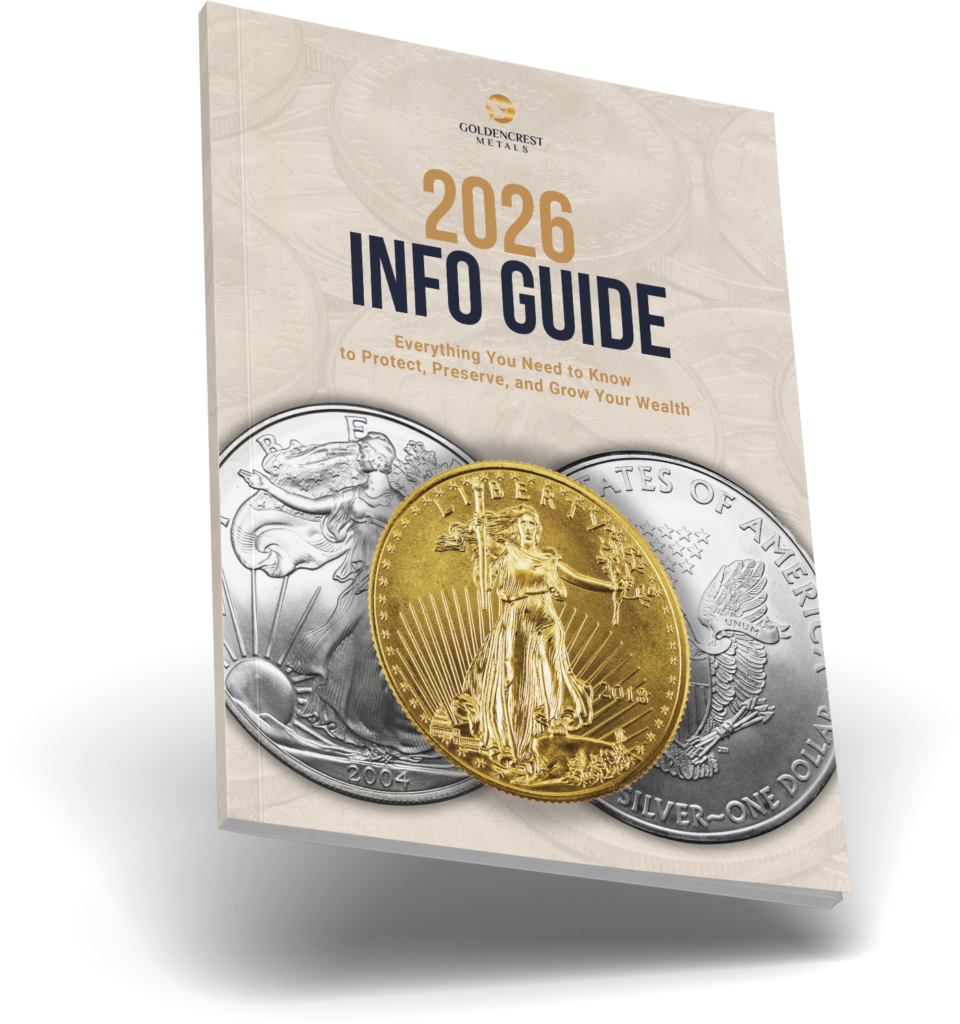
Download your free Gold IRA Guide today and discover: