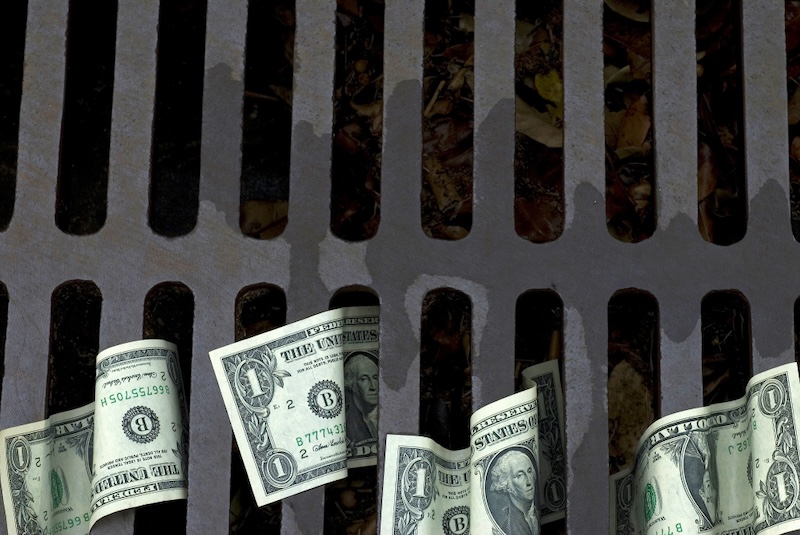
In May 2026, U.S. consumer prices rose 4.2% year over year — the highest annual inflation reading in three years — and President Trump responded that he “loved” it. For households, the math is less comfortable: real average hourly earnings fell 0.7% over the year, gasoline climbed more than 40%, and elevated prices have cost the typical family an estimated $3,100-plus. When the dollar buys less each month, savers historically look to assets that hold value independent of currency — which is why many retirement savers consider physical gold and silver inside a precious metals IRA.
Key Takeaways
- Headline inflation reached 4.2% in May 2026, the first time it topped 4% since 2023.
- Energy drove more than 60% of the monthly increase, with gasoline up roughly 40% year over year.
- Real average hourly earnings fell 0.7% over the year — the steepest decline in three years — meaning paychecks lost ground to prices.
- One estimate puts the cumulative cost of elevated prices at more than $3,100 for the average household.
- When the dollar weakens, retirement savers have historically turned to physical gold and silver as a store of value.
When the Bureau of Labor Statistics published its May 2026 Consumer Price Index, the annual inflation rate had climbed to 4.2% — its highest level since April 2023. Asked about the figure, President Trump told reporters he “loved” the inflation, later clarifying he meant the number came in lower than he had anticipated given the Iran conflict. For a family standing at the gas pump or scanning a grocery receipt, the data behind the headline tells the more practical story: prices are rising faster than wages, and the gap is widening.
This is the kind of environment where the difference between a dollar’s face value and its purchasing power becomes impossible to ignore. Below, we walk through what the latest figures actually show, why the squeeze is being felt unevenly, and how savers focused on protecting retirement wealth have historically responded.
1. A 4.2% Headline — and Why It Topped Forecasts in Spirit, Not in Numbers
The 4.2% annual figure for May matched what economists had penciled in, but the symbolism was hard to miss: it was the first reading above 4% in three years. On a monthly basis, prices rose 0.5%. The acceleration has been steep and recent — headline inflation has effectively doubled in roughly three months, climbing from 2.4% in January through 3.3% in March, 3.8% in April, and now 4.2%.
Strip out food and energy and the picture looks calmer. Core CPI rose just 0.2% for the month and sits at 2.9% annually, drifting up only modestly over the year. That divergence between a hot headline and a steadier core is the defining feature of this inflation episode — and it points squarely at one category.
2. Energy Did the Heavy Lifting
The BLS attributed more than 60% of May’s overall increase to energy. The energy index rose 3.9% in a single month and is up 23.5% over the year. Gasoline alone jumped about 7% month over month and roughly 40% from a year earlier, as the conflict with Iran disrupted oil supplies moving through the Strait of Hormuz. Electricity added another layer, up nearly 6% year over year — pressure that economists tie partly to surging power demand from data centers.
| Gasoline | ~40% | |
| Energy (overall) | 23.5% | |
| Electricity | 5.9% | |
| Headline CPI | 4.2% | |
| Core CPI | 2.9% |
3. Paychecks Are Losing the Race
An inflation rate is abstract until you set it against what people earn. In the same week, the BLS reported that real average hourly earnings — pay adjusted for inflation — fell 0.7% over the year, the largest such decline in more than three years. Real weekly earnings slipped as well. For the second consecutive month, prices outpaced wage growth.
That is the quiet engine behind the household squeeze. A raise that looks fine on paper can still leave a family worse off when the cart at the register costs more than the bump in pay. One estimate cited alongside the May data put the cumulative cost of elevated prices at more than $3,100 for the typical household.
4. Why the Dollar’s Quiet Erosion Matters for Retirement
Inflation does its most lasting damage to money that sits still. Cash in a savings account, the fixed side of a 401(k), the dollars earmarked for a retirement decades away — each loses a little purchasing power every month that prices climb faster than yields. A 4.2% annual rate means a dollar set aside today buys meaningfully less by the time it is spent.
This is the long-recognized appeal of holding tangible assets. Physical gold and silver are not tied to the creditworthiness of any government or the issuance policy of any central bank. Their value is independent of the currency that is losing ground. That independence is precisely what savers tend to seek when confidence in paper money is tested.
5. How Gold Has Behaved When Inflation Runs Hot
Gold’s reputation as a long-term store of value rests on a simple historical pattern: in periods when the dollar weakens and confidence wavers, demand for hard assets tends to rise. Central banks themselves have leaned into this logic, accumulating gold at a historic pace in recent years while trimming exposure to dollar-denominated reserves.
The price record reflects that demand. Gold reached a series of all-time highs through 2025 and into 2026, trading well above $4,000 per ounce this year even after the normal pullbacks that punctuate any sustained climb. Major institutions including J.P. Morgan and Deutsche Bank have published forecasts pointing toward $6,000 per ounce by year-end 2026. Forecasts are never guarantees, and metals can move in both directions — but the structural case rests on the same forces driving today’s headlines: currency debasement, geopolitical risk, and the search for assets that hold value on their own terms.
| Holding | In a high-inflation stretch | Tied to the dollar? |
|---|---|---|
| Cash savings | Purchasing power erodes as prices climb | Directly |
| Long-dated bonds | Fixed payments lose real value; rate-hike risk | Directly |
| Physical gold | Historically sought as a store of value | No — valued independently |
| Physical silver | Inflation hedge plus industrial demand | No — valued independently |
6. How a Precious Metals IRA Fits In
A self-directed precious metals IRA lets you hold IRS-approved physical gold and silver inside a tax-advantaged retirement account — the same tax treatment as a conventional IRA, applied to tangible metal rather than paper alone. You can fund one with new contributions or roll over eligible funds from an existing IRA or 401(k). The metals are stored at an approved depository, not at home, in keeping with IRS rules.
For 2026, the IRA contribution limit is $7,500 (or $8,600 for those 50 and older), and that limit applies across all your IRAs combined. Financial professionals commonly suggest keeping a precious metals allocation measured rather than dominant — often no more than around 15% of a total portfolio — so that metals complement, rather than replace, broader diversification.
If you want to understand the mechanics — eligible coins and bars, rollover steps, storage, and fees — the team at GoldenCrest Metals can walk you through it without pressure. You can also explore our Gold & Silver IRA FAQ or browse recent analysis in our Market News section.
Frequently Asked Questions
The Consumer Price Index rose 4.2% year over year in May 2026, the highest annual reading since April 2023. On a monthly basis, prices rose 0.5%.
Energy was the primary driver, responsible for more than 60% of the monthly increase. Gasoline rose roughly 40% over the year as the Iran conflict disrupted oil supplies through the Strait of Hormuz. Core inflation, which excludes food and energy, stayed steadier at 2.9%.
No. Real average hourly earnings fell 0.7% over the year — the steepest decline in more than three years — meaning inflation outpaced wage growth for a second straight month.
Inflation erodes the purchasing power of dollars held in cash and fixed-income assets. When prices rise faster than the return on your savings, the same balance buys less over time — which is why many savers seek assets that hold value independent of the dollar.
Gold is not tied to any currency or government, so its value does not erode alongside the dollar. Historically, demand for gold has risen when confidence in paper money weakens, which is part of why central banks have been accumulating it at a record pace.
A self-directed IRA that holds IRS-approved physical gold, silver, platinum, or palladium inside a tax-advantaged retirement account. It carries the same tax treatment as a conventional IRA, with metals stored at an approved depository.
Yes. Eligible funds from an existing IRA or 401(k) can be rolled over into a precious metals IRA. A GoldenCrest specialist can explain the steps and confirm what qualifies.
Financial professionals often suggest keeping a precious metals allocation measured — commonly around 15% of a total portfolio or less — so metals complement broader diversification rather than replace it. The right figure depends on your goals and timeline.
- U.S. Bureau of Labor Statistics — Consumer Price Index, May 2026
- CNBC — CPI inflation report and consumer impact coverage, June 2026
- Fox Business — May 2026 CPI category breakdown
- CBS News — May 2026 inflation and energy coverage
- Fortune — daily gold price reporting; J.P. Morgan and Deutsche Bank 2026 forecasts
This article is for informational and educational purposes only and does not constitute financial, investment, tax, or legal advice. GoldenCrest Metals is not a financial advisor. Precious metals carry risk and can decline in value; past performance and forecasts do not guarantee future results. Consult a qualified professional regarding your individual circumstances before making investment decisions. Price figures and economic data referenced reflect reporting available as of June 2026 and are subject to change.